From my experience traveling to a couple of places, here are the things that I've found useful to know
Document everything
You don't want to loose an important document and re-do bureaucracy to get it again, right?
If some document is needed in any part of some bureaucracy for your trip, then take photocopies and/or scans with you. Do this as soon as you get the document, don't wait until you need the document in the future. Your future self will thank you.
A good file management system is a blessing. This is how I do it: For physical documents you could group them in different batches, use color coding, etc... while for digital documents you could organize them in folder by place and bureaucratic process.
For example: "2021\Studies in Narnia\Visa application\Birth certificate with Narnian translation.pdf"
This website for working with PDFs has helped me a lot of times (merging, cutting, page extraction, compressing, etc).
Without good documentation:

(The Process, by Franz Kafka)
With good documentation:

What's your name?
Different languages use different naming conventions for people. Find out how to put your name in the convention of where you are going, and stick to it.
I'll give an example for Spanish into French.
The Spanish language convention for names:
Shakira's name at birth was "Shakira Isabel Mebarak Ripoli". She's from Colombia, a Spanish speaking country, so she uses the Spanish language convention for names.
In this convention, a person's full name has four parts: two simple names and two family names.
- A First name: Shakira
- (Optional) One or more middle names: Isabel
- A First family name, traditionally it's the First family name of the father: Mebarak
- A Second family name, traditionally it's the First family name of the mother: Ripoli
To speak to someone:
- in informal settings one just uses the first name: "hey, Shakira!";
- in semiformal settings (like a teacher in elementary school), one uses the first name and first family name: "Hello, Shakira Mebarak!";
- and in very formal settings or documents one uses the full name "Shakira Isabel Mebarak Ripoli".
The French language convention for names:
French uses a different convention, a name (nom) consists of just two parts: a first name (prénom) and a family name (nom (de famille)).
Emannuel Macron's full name is Emmanuel Jean-Michel Fréderic Macron.
Here, the name is divided like this:
- Prénom: Emmanuel Jean-Michel Fréderic
- Nom (de famille): Macron
As we can see, the Prénom may contain many simple names.
From Spanish naming into French naming
So when Shakira wants to make a concert in France, how should she fill her taxes?
Here she could take advantage of the format of Passports.
Many Spanish speaking countries print their passports combining the First and Middle names into a single "Simple Names" field, and the First and Second family names into a single "Family Names" field.
Therefore, the conversion into the French format is natural:
She could use her First and Middle names together as a Prénom, and her First and Second family names as a Nom (de famille).
Shakira would fill her French taxes as follows:
- Prénom: Shakira Isabel
- Nom (de famille): Mebarak Ripoli
Note that this decision will have practical consequences for Shakira: While in Spanish the Middle names are rarely used, now she will have to use them very often for French bureaucracy.
In general, if you don't stick to the name you've chosen for your target
language, you will run into a lot of trouble because people will not be
able to easily verify your identity.
Different Scripts
If your target country uses a different script than your home country for documents (Latin script, Arabic script, Cyrillic script, Greek script, Devanagari script, etc.), then you will have an extra layer of bureaucratic difficulty.
The most safe but expensive way to deal with this is to have official translations (maybe with an Apostille), see which conventions they use to transcribe/transliterate things like your name or the name of your university, and continue using them everywhere.
For example, from this Wikipedia entry, the common name "Γιάννης" can be written as Yannis, Jani, Ioannis, Yianis, or Giannis, but not Giannes.For example, the Russian naming convention includes a patronymic inside full names, and also uses the Cyrillic script!
As I said, you have to figure out the name you'll use abroad.

(say it!)
IDs
This should go without saying, but having all your IDs valid and up to date is tremendously important.
Information Labyrinths
Government information is convoluted: Get ready to read everything at least three times.
It will not make any sense by the first read. You'll be confused by the bureaucratic gibberish, the unhelpful forum posts, and the broken links. Little by little, you'll start to see how everything connects.
This is harder if you're going to a place that speaks another language. Even the most international-friendly countries have their websites with tons of links for information only available in the local language.
The most helpful method is to find someone who has already done what you did and wants to help, or to look for information online (like this blog!)

Money talks
When talking about money we need to be serious.
Learn how to make an international transaction from your home country. Go to you bank and ask them for all the necessary paperwork. However, don't hesitate to ask around many banks and see which has a better deal for international transactions.
For example, in my country, very few banks work with Euros easily, so I had to search for one where I could at least save them without converting them into another currency.
Also, look for good places to exchange currency! In my experience banks tend to have the worst possible deals! I prefer currency exchange houses, one can ask around many of them to get a good deal. Virtual currency exchanges and using crypto are getting popular, but I've not used them yet.
Closing all you bank accounts is a bad idea: They are useful for sending money back, and paying for local bureaucracy easily.
How will your taxes work once you stop living in your home country? Is there anything you need to do to avoid being taxed? This information is important, and varies from place to place. For example, most countries don't tax their citizens once they are residents abroad, yet one of the big exceptions is the USA.
Treat your money with the utmost care!
Navigation apps
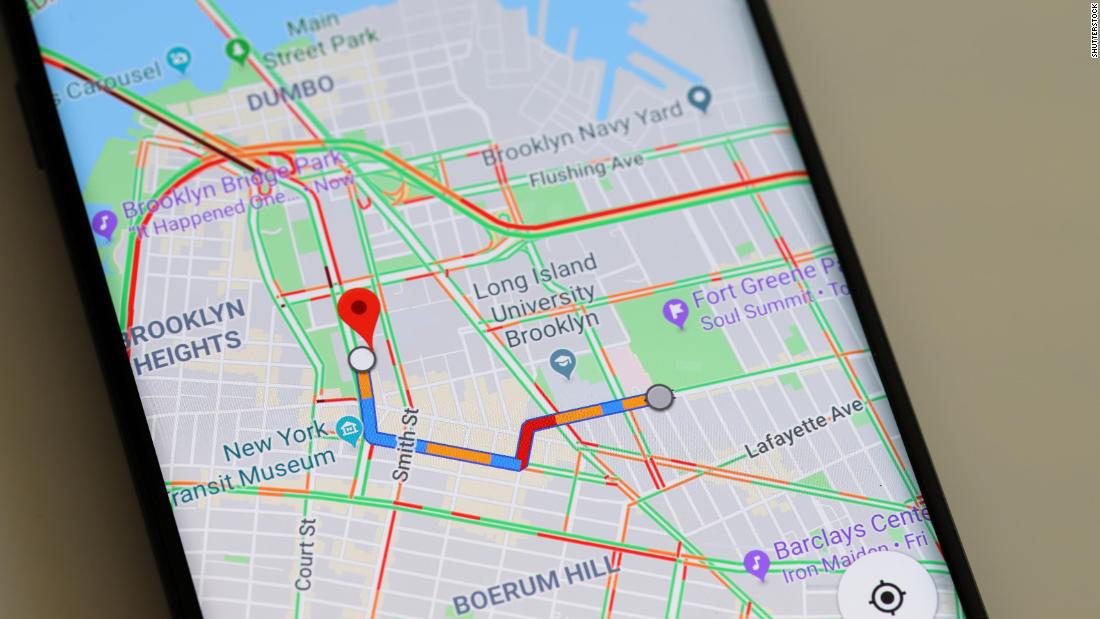
To get around, Google Maps is very trustworthy. It even lets you download maps for offline use!
For public transport, I've found Moovit to be very well done. Instead of downloading a local app for each city you go to, Moovit has a decent summary of most cities.
Miscellaneous
Find out the address format (for houses, mail, etc) of the place you're going to.
Check electricity specifications, like voltage and frequency, to know if you'll need to buy adapters or transformers. Extensions are a good idea.
Safe travels!


No comments:
Post a Comment